

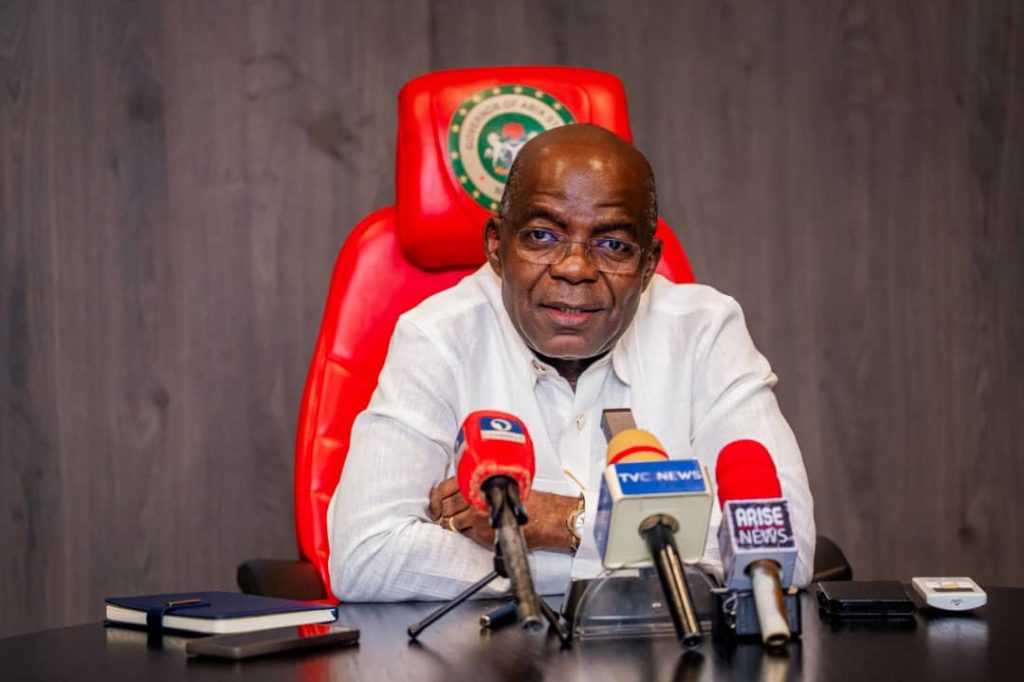
In Abia State, political tension is rising as former governors and past political leaders have begun moves aimed at stopping Governor Alex Otti from securing a second term in office. The situation developed ahead of the 2027 polls, with opposition figures holding meetings and making public statements against the current administration.
Recently, two former governors of the state, Orji Uzor Kalu and Theodore Orji, alongside other former office holders, announced that they had formed a political alliance to challenge Otti’s re-election bid. The group stated that its goal is to secure all elective positions in the state for the All Progressives Congress during the next general election. They met in Umuahia, where they agreed to work together under a platform known as “The Team.”
The former leaders also indicated plans to approach the courts over claims that Governor Otti operates state affairs from his country home in Nvosi rather than the Government House in Umuahia. Kalu described the alliance as a gathering of experienced politicians seeking to remain relevant in the state’s political space and defended the records of past administrations.
Kalu has also accused the current governor of failing to carry out major projects, claiming that the roads being worked on were constructed during his own time in office. He stated that he would no longer support Otti politically, despite backing him during the 2023 election. According to him, the resources now available to the state are far greater than what past administrations received.
In response, an aide to Governor Otti, Reverend Father Christian Anokwuru, dismissed the opposition’s actions, saying the moves were baseless and driven by individuals who previously mismanaged the state. He argued that the former leaders were relying on name-dropping and external influence rather than their own records in office.
Political analysts have also weighed in on the situation. A public affairs analyst, Nduka Odo, said the alliance against Otti is largely about protecting personal and economic interests rather than public welfare. He noted that the current administration ended the payment of salaries and allowances to former governors and deputies, a benefit still enjoyed in many other states, which may have triggered the opposition.
Civil society groups have echoed similar views. The president of the Civil Rights Realisation and Advancement Network, Olu Omotayo, said developments under Otti’s government are visible to residents and do not require political promotion. He argued that the true test of governance is public perception and daily impact on citizens’ lives.
Another rights advocate, Onyebuchi Igboke, described the political battle as a clash between performance-based leadership and patronage politics. He said Otti’s projects and policies have gained recognition both within and outside the state, adding that attempts to discredit the governor would not change public opinion.
As the 2027 election draws closer, Abia State continues to witness growing political activity, with both supporters and opponents of the current administration positioning themselves for the contest ahead.
CLICK THE LINK TO READ FULL LIST

Comments are closed.