

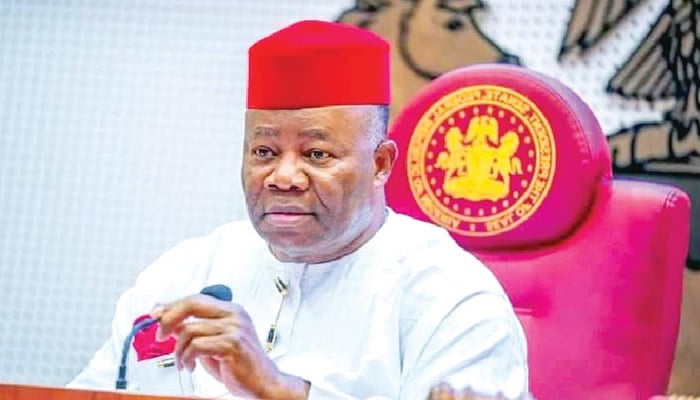
The Nigerian Senate has fixed an emergency plenary session for Tuesday, February 10, 2026, following growing public anger over amendments to the Electoral Act. The sitting will take place at noon at the National Assembly in Abuja after strong reactions greeted the Senate’s recent decision on election result transmission.
The emergency meeting was announced on Sunday by the Clerk of the Senate, Emmanuel Odo, who stated that all senators have been directed to return for the session on the instruction of Senate President Godswill Akpabio. The move comes after the Senate passed the Electoral Act Amendment Bill on February 4 but removed a provision that would have required election results to be sent electronically from polling units to INEC’s result portal in real time.
Instead of making electronic transmission compulsory, the lawmakers retained an older rule that allows results to be transferred electronically only after votes have been counted and announced at polling units. This decision triggered backlash from labour unions, civil society groups, opposition figures, and election observers, who fear it could weaken transparency during elections.
The Nigeria Labour Congress reacted strongly, warning that the Senate’s action could damage trust in the electoral system. The union accused lawmakers of creating confusion by failing to clearly state whether electronic transmission of results would be compulsory. It warned that Nigerians could resort to protests, election boycotts, or other actions if clarity is not restored.
At the same time, a coalition of political activists operating under the Movement for Credible Elections announced plans for a protest in Abuja tagged Occupy NASS. The group described the Senate’s decision as harmful to democratic growth and said it could open the door to manipulation during result collation. The protest is scheduled to hold on Monday, a day before the emergency Senate sitting.
The House of Representatives has also stepped in, as its bipartisan conference committee plans to meet with a Senate committee to settle differences between the versions of the amendment bill passed by both chambers. A member of the committee confirmed that discussions would begin within the week as part of the lawmaking process.
Civil groups have continued to press for clearer rules, arguing that electronic transmission of results would reduce disputes between polling unit figures and final results. They also warned that unclear laws could discourage voters and weaken confidence in elections ahead of the 2027 polls.
Despite the criticism, Senate President Godswill Akpabio has defended the chamber’s position, stating that the Senate did not reject electronic transmission outright and insisting that lawmakers would not bow to pressure.
The pan-Yoruba group Afenifere also joined the debate, urging the joint committee of the National Assembly to approve compulsory real-time electronic transmission of results. The group warned that failing to do so could further reduce public trust in democracy and weaken accountability in elections.
As tensions rise, Nigerians are watching closely to see whether the emergency Senate meeting and the harmonisation process will lead to clearer rules on how election results are transmitted and managed in future elections.
CLICK THE LINK TO READ FULL LIST

Comments are closed.