

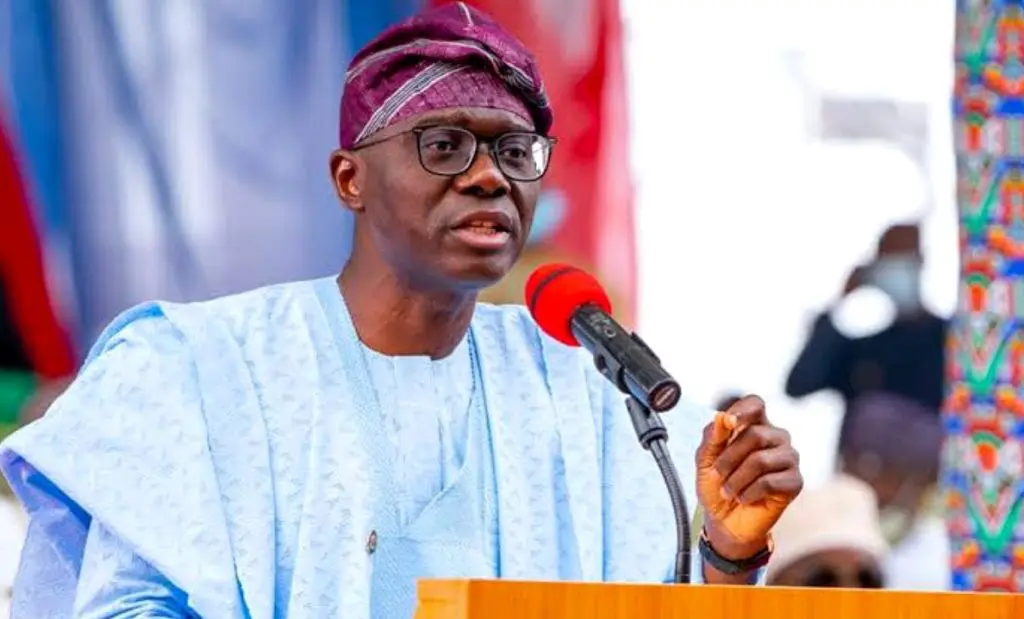
The Lagos State Government has brought back the monthly environmental sanitation exercise, with Governor Babajide Sanwo-Olu announcing that the activity will begin in April across the state. The exercise will take place on the last Saturday of every month between 6:30 a.m. and 8:30 a.m.
CLICK THE LINK TO READ FULL LIST
Sanwo-Olu made the announcement on Saturday during a stakeholders’ meeting on environmental sanitation held in Lagos. The event marked the formal start of the renewed effort to encourage residents to take part in keeping their surroundings clean.
CLICK THE LINK TO READ FULL LIST
The governor explained that the exercise is meant to promote public health and strengthen civic responsibility among residents. According to him, the programme is designed to reach all communities in Lagos and help people develop a stronger awareness of environmental cleanliness.
He stated that the effort to maintain a clean city cannot be handled by government alone and requires cooperation from residents. He explained that daily habits such as how people manage waste in their homes, markets and streets play a major role in determining the condition of the environment.
Sanwo-Olu also pointed out that proper environmental management must depend on shared responsibility between the government and the public rather than relying only on enforcement measures.
The governor recalled that the monthly sanitation exercise had once been a regular civic activity in Nigeria. During that period, residents set aside time on the last Saturday of each month to clean their neighbourhoods as part of efforts to maintain public health.
The exercise was stopped in November 2016 after a Federal High Court ruling in March 2015 declared that restricting movement during the sanitation hours violated citizens’ freedom of movement. The ruling made it difficult to enforce the earlier method used for the exercise.
Following the decision, the administration of former Governor Akinwunmi Ambode cancelled the mandatory cleanup programme.
Sanwo-Olu explained that while the court ruling ended the movement restriction that was part of the earlier sanitation system, the responsibility of keeping the environment clean still remains with both government and residents.
He said the new approach would focus on encouraging people to participate voluntarily through awareness campaigns and partnerships with communities instead of relying only on enforcement or punishment.
The governor also warned residents against the habit of dumping refuse such as sachet water nylons, plastic bottles and other waste into drainage channels. He said the practice has contributed to flooding and damage to roads in many parts of the state.
Related News
According to him, blocked drainage systems often lead to the failure of roads even after repairs have been carried out. When drains meant to carry rainwater are filled with waste, the water has no passage and this weakens the surrounding roads.
Sanwo-Olu therefore urged community development associations, market leaders, youth groups, religious bodies, political groups and community committees to take responsibility for keeping their areas clean.
He explained that environmental sanitation should be treated as a duty shared by everyone living in the state rather than being seen as a government campaign.
The Commissioner for the Environment and Water Resources, Tokunbo Wahab, also spoke during the meeting and described the return of the sanitation exercise as a step toward restoring a culture of cleanliness that existed in Lagos before 2016.
Wahab said the decision to restore the programme followed more than one year of discussions between the state government and stakeholders in the environmental sector. According to him, the consultations were aimed at ensuring the exercise would return in a way that respects the law and receives support from residents.
He urged residents to set aside one or two hours each month to clean their homes, business areas and streets. He explained that the small effort from individuals could improve the overall condition of the environment and protect public health.
The commissioner also noted that traders in markets across Lagos already observe weekly sanitation every Thursday morning. He said the monthly exercise will extend the culture of cleanliness beyond markets to cover entire communities.
Wahab added that the state is working to change its waste management system by moving from the old method of simply collecting and dumping refuse at landfill sites to a new system where waste can be converted into useful products.
Under the new approach, waste materials can be processed into energy, compost, fertiliser and recyclable products, which may also create economic opportunities.
He thanked environmental agencies, private operators and community groups for supporting the initiative and said cooperation among different groups would help the programme succeed.
Several government officials attended the meeting, including Deputy Governor Obafemi Hamzat, the Head of Service Bode Agoro and the Chief of Staff Tayo Ayinde.
The event focused on encouraging residents and stakeholders to work together in keeping Lagos clean and healthy.

Comments are closed.