

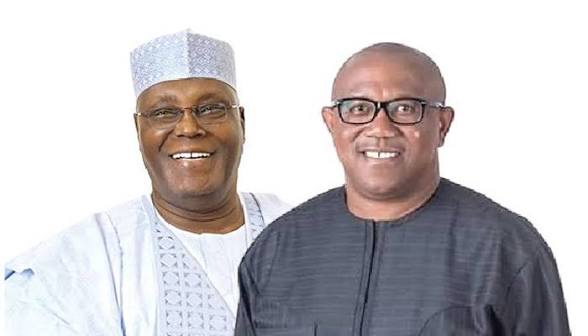
Opposition political parties and their presidential candidates have begun fresh talks in Abuja on how to work together and possibly produce a single candidate to challenge President Bola Tinubu and the All Progressives Congress in the 2027 presidential election.
CLICK THE LINK TO READ FULL LIST
The meeting, held on Monday at the Shehu Musa Yar’Adua Centre, was organised by the G-100 political group as part of efforts to prevent the opposition vote from being divided during the next presidential election.
CLICK THE LINK TO READ FULL LIST
Former Vice President Atiku Abubakar, who is the presidential candidate of the African Democratic Congress, and Peter Obi of the Nigeria Democratic Congress were not present at the meeting.
Representatives of six opposition parties attended the summit. They included the ADC, Allied Peoples Movement, NDC, Peoples Democratic Party, Peoples Redemption Party and Social Democratic Party.
Among those who attended were PRP presidential candidate Donald Duke, SDP candidate Adewale Adebayo, Democratic Leadership Alliance candidate Moses Olusoji and APM vice-presidential candidate Lawan Daura. Other party leaders and political stakeholders were also present.
No official reason was immediately given for the absence of Atiku and Obi. However, people familiar with the talks said both politicians were monitoring the process and could become involved in later discussions depending on the direction of the negotiations.
Atiku’s media aide, Phrank Shaibu, later said the former vice president’s absence should not be seen as a rejection of the opposition unity effort. He said Atiku remained committed to building a broad opposition platform ahead of the 2027 election.
The meeting comes amid growing calls for opposition parties to avoid repeating the experience of the 2023 presidential election, when votes were shared among several major opposition candidates.
G-100 convener, Salihu Lukman, told participants that the opposition had a stronger chance of defeating the APC if it could agree on a workable system for cooperation.
He pointed to the 2015 election as an example of how opposition parties could overcome differences through negotiation. Several parties came together to form the APC, which defeated the then-ruling PDP.
Lukman said the current discussions should not begin with demands that any party dissolve or that a presidential candidate immediately withdraw from the race. Instead, he said the parties should first agree on rules that would guide the negotiation and allow competing interests to be considered.
Former Cross River State Governor and PRP presidential candidate Donald Duke also expressed support for the process. He said he would accept the outcome of the negotiations even if he was not selected as the eventual opposition candidate.
Related News
At the end of the meeting, the participating parties agreed to begin a formal negotiation process on opposition cooperation ahead of the election.
They agreed to create three main bodies to guide the talks. These are a Central Leadership Committee, a Publicity and Communication Committee and a Legal Committee.
The Central Leadership Committee is expected to coordinate the political side of the discussions, while the communication team will handle joint public statements and media activities. The legal committee will deal with legal matters and prepare agreements that may arise from the negotiations.
Five other working groups were also approved to develop proposals on key areas of the planned alliance.
The groups will work on a National Covenant for Democratic Renewal, a Single-Term Transition Charter, a National Reform Programme, a Framework for Opposition Unity and a plan for selecting a common presidential candidate.
The groups have four weeks to complete their assignments. The participating parties are expected to meet again afterwards to consider the recommendations and decide on the next stage of the process.
The proposed Single-Term Transition Charter is part of a wider plan for a four-year transition government. The G-100 has linked the proposal to a planned national reset and a government it describes as being based on competence.
Details on how such a transition government would operate were not provided at the summit, including whether constitutional changes would be needed to implement the proposal.
The opposition group also called for more openness and accountability from people holding top public offices.
Another resolution from the summit called on the United States Government to release, within the law, official records concerning President Tinubu that are not exempt from disclosure and are considered to be of legitimate public interest.
The request referred to ongoing Freedom of Information proceedings in a United States federal court. The group also stated that the demand should not be taken as an assumption about the contents of any records that have not been made public or as proof of wrongdoing.
The G-100 said it would also approach the ECOWAS Commission and other relevant regional institutions over issues relating to transparency and public accountability.
The negotiations are taking place at a time when several opposition figures have already secured presidential tickets from their respective parties, making the search for a single candidate more difficult.
The major issue before the group is how to convince presidential contenders to accept a process that could require some of them to step aside for another candidate.
The opposition parties are also expected to resolve disagreements over party structures, campaign resources, policy priorities and the terms of any possible alliance.
The 2023 election remains a major factor behind the current push for cooperation. Atiku, Obi, Rabiu Kwankwaso and other candidates contested separately, splitting votes that might otherwise have formed a stronger challenge to the APC.
The G-100 now hopes that the new negotiation process can produce an arrangement acceptable to the major opposition parties and candidates before the 2027 election.
For the initiative to succeed, the organisers will need to bring the leading presidential contenders fully into the discussions and build confidence that the process for selecting a common candidate will be fair and transparent.

Comments are closed.