

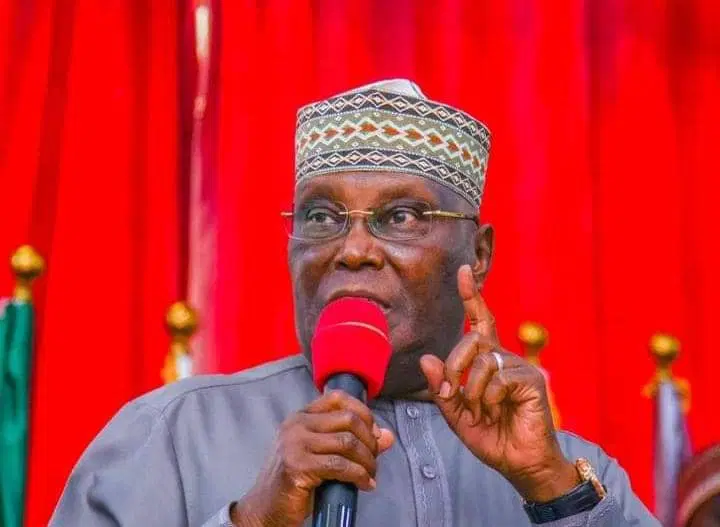
Fresh disagreements have surfaced within Nigeria’s opposition camp ahead of the 2027 presidential election after several political parties and pressure groups rejected the position of former Vice President Atiku Abubakar on zoning and the presidential race.
CLICK THE LINK TO READ FULL LIST
The disagreement started after Atiku’s camp warned opposition parties against presenting southern presidential candidates to challenge President Bola Tinubu in 2027. According to the former vice president’s supporters, no southern opposition candidate has ever defeated a sitting southern president in Nigeria’s political history.
CLICK THE LINK TO READ FULL LIST
Atiku’s media aide, Olusola Sanni, also argued that the South would have spent more years in power than the North by 2027, making it difficult to justify another southern presidency after Tinubu’s first term.
The position immediately drew reactions from several opposition parties and political groups including the All Progressives Grand Alliance, Labour Party, Young Progressives Party, Social Democratic Party, New Nigeria People’s Party, Nigeria Democratic Congress, the Kwankwasiyya Movement and the Obidient Movement.
Many of the groups maintained that the presidency should remain in the South in the interest of fairness, political balance and national unity. Others argued that leadership quality matters more than regional calculations.
The National Publicity Secretary of APGA, Ejimofor Opara, said the South should complete its turn in office, adding that Tinubu could still be defeated by another southern candidate if Nigerians decide to support an alternative.
The Young Progressives Party also disagreed with Atiku’s argument. The party said elections should not be based only on region but on competence and the ability to solve the country’s problems. YPP leaders said Nigerians need leaders with vision and capacity regardless of where they come from.
The Social Democratic Party stated that it was already preparing to challenge the ruling APC with a southern presidential candidate. The party said growing hardship, inflation and insecurity would shape the 2027 election more than regional politics.
Related News
The NNPP also maintained that Nigerians would decide who becomes president in 2027 and not political elites. While the party admitted that there is an understanding about power rotation between the North and South, it insisted that voters still have the final decision.
Leaders of the Kwankwasiyya Movement described Atiku’s comments as divisive and unfair to southern politicians. The group argued that Nigeria’s political stability depends on respecting the rotation of power between both regions.
The Nigeria Democratic Congress also said the mood within many opposition groups favours retaining the presidency in the South, especially because Tinubu is still serving his first term.
The Labour Party rejected Atiku’s political calculations and pointed to the outcome of the 2023 election where multiple southern candidates contested and one of them still won the presidency. The party argued that voting behaviour in Nigeria goes beyond region and includes issues such as security, governance and economic conditions.
Despite the criticism, the Peoples Democratic Party defended the principle of zoning, saying it remains important for national balance and political stability. The PDP explained that zoning was introduced to reduce tension and create inclusion in Nigerian politics.
Meanwhile, the debate has continued to deepen following recent political realignments ahead of the 2027 election. Former Labour Party presidential candidate Peter Obi and former Kano State governor Rabiu Musa Kwankwaso recently moved to the Nigeria Democratic Congress during ongoing coalition talks among opposition leaders.
The Obidient Movement said both politicians left the ADC after discovering plans that could have frustrated their ambitions through legal battles and internal party disputes.
Political observers believe the disagreement over zoning and power rotation may affect ongoing coalition talks among opposition parties as preparations for the 2027 presidential election continue.

Comments are closed.