

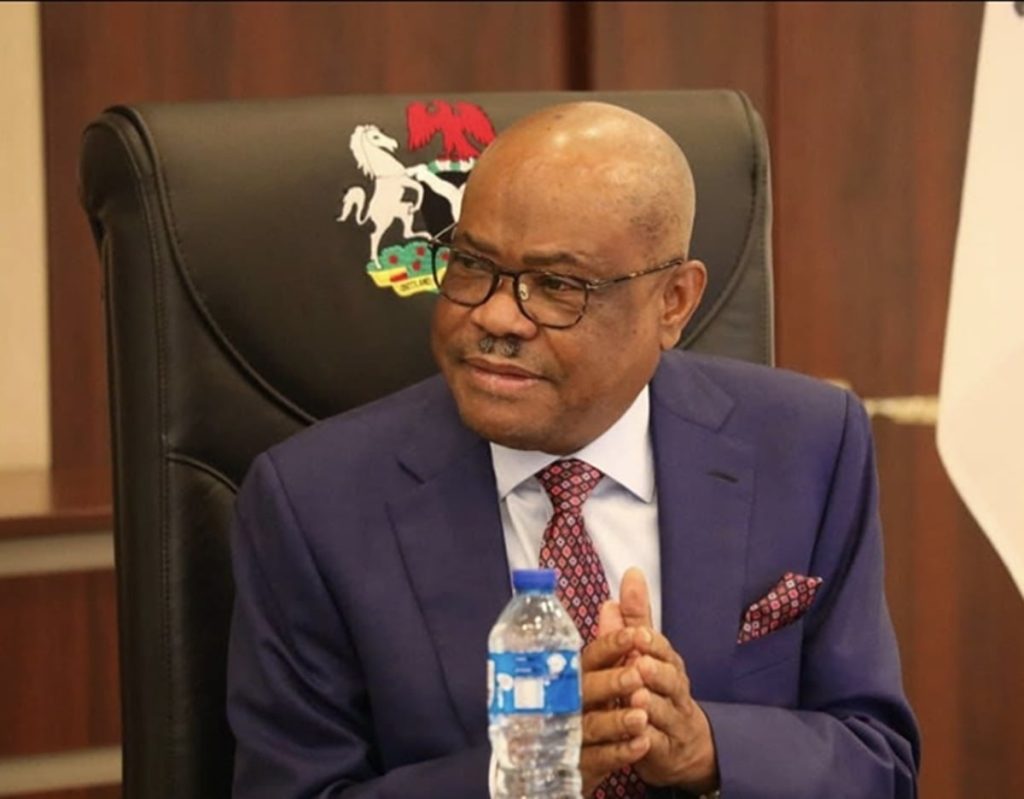
Minister of the Federal Capital Territory, Nyesom Wike, has credited President Bola Tinubu’s leadership style, political will and development agenda for the growing number of infrastructure projects taking shape across Nigeria.

CLICK THE LINK TO READ FULL LIST

- Advertisement -
Wike spoke during the 36th Convocation Ceremony of the University of Port Harcourt, where he delivered a lecture on leadership and infrastructure development. He said the country is currently witnessing a period in which government policies and projects are being directed toward addressing long-standing development challenges.

Sponsored Ads
According to the minister, infrastructure remains one of the most visible ways to measure the performance of any government because it directly affects economic growth, job creation and the quality of life of citizens. He stated that roads, rail lines, power supply, housing projects and digital facilities are necessary for national progress and must remain a priority.


- Advertisement -
Wike said the Tinubu administration has shown determination in tackling difficult issues while directing resources toward projects that can improve productivity and expand economic opportunities. He noted that although some projects were inherited from previous governments, the current administration has accelerated their execution and incorporated them into a broader development plan.
He pointed to several road projects across the country, including the Lagos-Calabar Coastal Highway, the Sokoto-Badagry Super Highway, the Abuja-Kaduna-Zaria-Kano Road, the East-West Road and roads linked to the Second Niger Bridge.
According to him, these projects are expected to improve transportation, strengthen trade and support economic activities in different regions.
The minister also referred to ongoing efforts in the railway sector, including the rehabilitation of the Port Harcourt-Maiduguri railway line and the expansion of standard gauge rail networks. He said these projects are designed to improve movement of people and goods while reducing transportation costs.
Related News
Speaking on electricity, Wike noted that the government is pursuing measures aimed at improving power supply through the Presidential Power Initiative being implemented with Siemens. He also mentioned rural electrification programmes and metering schemes intended to improve service delivery and increase confidence among electricity consumers.
He further spoke about the administration’s energy plans, including the Presidential Compressed Natural Gas initiative and the National Hydrogen Policy. According to him, these programmes are intended to prepare Nigeria for future energy demands while creating alternative sources of energy for citizens and businesses.
Wike also listed investments in housing, aviation, telecommunications, security and education as part of efforts to strengthen national development. He mentioned the Nigeria Education Loan Fund, describing it as a programme that is helping more students gain access to higher education.
The former Rivers State governor defended the removal of fuel subsidy, describing it as one of the administration’s major policy decisions. He argued that the policy has increased the financial resources available to governments at different levels, making it easier to fund development projects and public services.
According to him, true leadership requires making decisions that may be difficult in the short term but beneficial to the country in the future. He maintained that infrastructure projects should be assessed based on their completion and impact rather than the number of announcements made by government officials.
Wike said Nigeria’s ambitions for growth and development would be difficult to achieve without continuous investment in transportation, electricity, healthcare, education and other critical sectors. He urged Nigerians to support initiatives aimed at building a stronger economy and improving living conditions across the country.
He concluded by saying that leadership should be measured by results and the ability to turn plans into practical achievements. The minister added that the quality of a nation’s infrastructure remains closely linked to the commitment and vision of those entrusted with governance.
The lecture was one of the major events held as part of activities marking the University of Port Harcourt’s 36th Convocation Ceremony, which attracted academics, students, government officials, alumni and other guests from different parts of the country.

Comments are closed.