

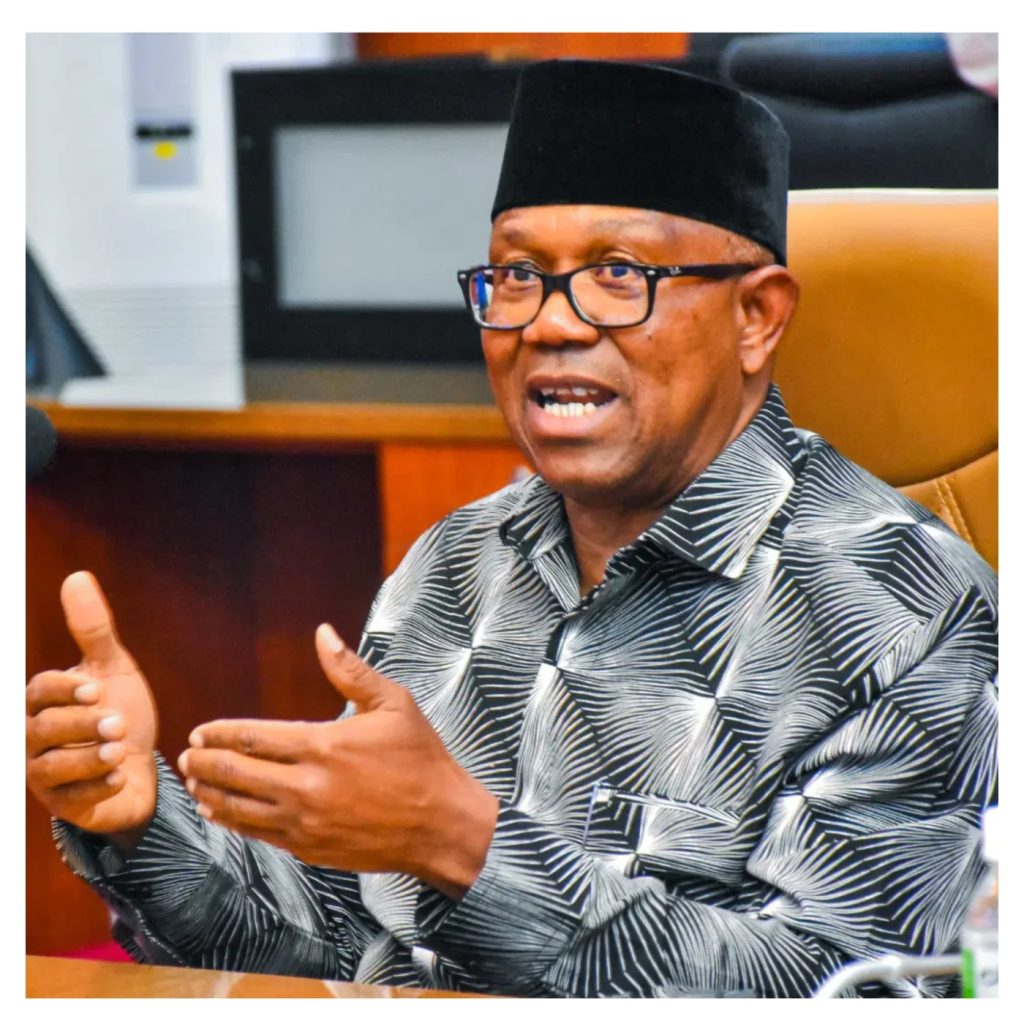
Labour Party presidential hopeful Peter Obi has restated his commitment to serving only one term if elected president in the 2027 general election, saying four years is enough to begin rebuilding Nigeria. He made the remarks during an interview at an airport, where he discussed security, the economy, elections, corruption and other national issues.

CLICK THE LINK TO READ FULL LIST

- Advertisement -
Speaking on security, Obi said the first duty of any government is to protect lives and property. He argued that solving insecurity requires more than military action, adding that better intelligence, stronger cooperation among security agencies, improved technology, better welfare for security personnel and efforts to reduce poverty and unemployment are all necessary to address the problem.

Sponsored Ads
On the economy, Obi said reforms are important but must be properly planned and carried out in a way that does not place unnecessary hardship on citizens. He maintained that Nigeria should shift its attention from consumption to production by investing more in agriculture, manufacturing and small businesses.


- Advertisement -
He also defended his economic plans, saying the country can make progress by reducing the cost of governance, cutting waste, blocking revenue leakages and creating an environment that encourages businesses to grow.
According to him, Northern Nigeria has enough fertile land to become a major agricultural hub if security improves and farmers receive the support they need through irrigation, infrastructure, financing and access to markets.
Obi added that agriculture should become a major source of export earnings, arguing that productive land can provide lasting wealth if properly managed.
On political alliances ahead of the 2027 election, Obi said political parties should be seen as platforms for governance rather than the main goal. He stated that what matters most is bringing together capable Nigerians who are ready to solve the country’s challenges.
Related News
Addressing repeated questions about whether he would serve only one term, Obi said he remains committed to spending just four years in office if elected. He explained that restoring trust in leadership is one of his priorities and said he is prepared to back his promise with a legally binding affidavit if necessary. He added that keeping such an agreement is important for national unity and public confidence.
Speaking on criticism directed at him, Obi said anyone seeking to change the country should expect opposition. He noted that his focus remains on improving Nigeria rather than pursuing personal ambition.
He also urged Nigerians not to lose faith in the electoral process despite growing frustration among many citizens.
According to him, the 2027 election offers another opportunity for voters to shape the country’s future, adding that people should participate actively and protect their votes.
On electoral reforms, Obi called for strict compliance with electoral laws, greater use of technology and stronger independence for institutions responsible for conducting elections. He also expressed concern over unresolved issues surrounding the electronic transmission of results during the last general election.
Discussing corruption, Obi said honest leadership is one of the strongest ways to reduce corruption in government. He argued that leaders who manage public funds responsibly and ensure transparency can help build public confidence and improve accountability.
He also expressed concern over Nigeria’s rising debt, saying borrowing should be directed toward productive sectors such as education, healthcare, agriculture, manufacturing, technology and infrastructure rather than financing consumption.
Obi further described education and healthcare as investments that are necessary for national development, adding that improving human capital should remain a priority for any government.
He concluded by saying Nigeria can become more attractive to investors through credible leadership, stable institutions and consistent government policies. He urged Nigerians to remain hopeful, expressing confidence that better leadership can help the country overcome its present challenges.

Comments are closed.