

The All Progressives Congress and the African Democratic Congress have disagreed over fuel subsidy removal, with the APC warning against Atiku Abubakar’s proposal to restore the policy and the ADC demanding an account of about N15.8tn it says was generated from the reforms.
CLICK THE LINK TO READ FULL LIST
CLICK THE LINK TO READ FULL LIST
The dispute comes ahead of the 2027 general elections, as fuel prices and the rising cost of living continue to feature strongly in political discussions across the country.
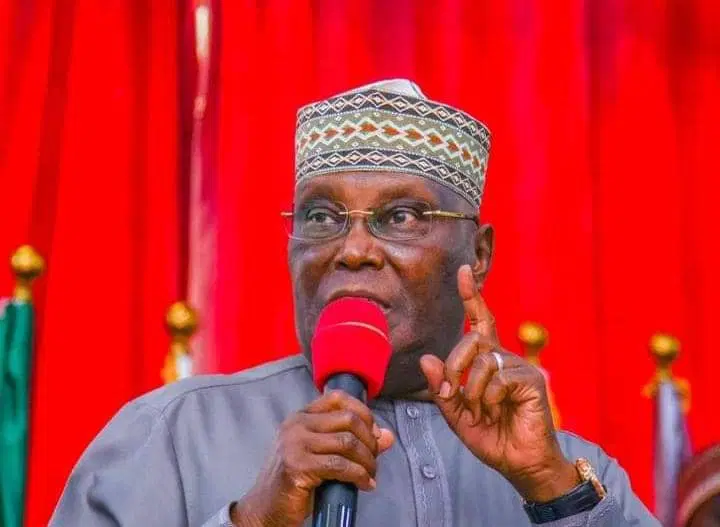
The APC National Chairman, Prof Nentawe Yilwatda, criticised the position of Atiku, the ADC presidential candidate, who recently said he would bring back petrol subsidy if elected in 2027.
Yilwatda argued that returning to the former subsidy system could place fresh pressure on government finances and affect the ability of federal and state governments to meet their obligations.
He said the subsidy regime should not be judged only by the possibility of cheaper petrol at filling stations. According to him, government would also have to consider how much public money would be needed to maintain the scheme and what other areas could lose funding as a result.
The APC chairman said the removal of subsidy had increased the funds available to states through federal allocations. He warned that restoring the policy could reduce government revenue and create difficulties in paying workers, pensions and funding public services.
He also linked the subsidy debate to education, healthcare and infrastructure, arguing that a return to a costly subsidy arrangement could put pressure on funding for these areas.
Yilwatda acknowledged that Nigerians had faced serious hardship since the removal of the subsidy but maintained that the government should focus on measures that can reduce the impact of the reform instead of returning to the old system.
He also pointed to the Nigeria Education Loan Fund as one of the programmes that requires steady government funding to help students access higher education.
The APC chairman further said reforms in the financial sector were creating more opportunities for young Nigerians involved in digital businesses, freelancing, software development and content creation.
He maintained that the government needed a stable financial system capable of supporting Nigerians who provide services to clients outside the country.
The disagreement took another turn when the ADC challenged the Federal Government to explain how the additional revenue generated since the removal of petrol subsidy had been used.
The opposition party directed its demand at Abdulaziz Yari, the Director-General of President Bola Tinubu’s 2027 re-election campaign, following his comments on proposals to ease the economic difficulties faced by Nigerians.
The ADC said figures attributed to the Minister of Finance indicated that about N15.8tn in additional resources had accrued to the Federation between June 2023 and December 2025 as a result of subsidy removal and foreign exchange reforms.
Related News
The party claimed that roughly N5.4tn went to the Federal Government, another N5.4tn went to state governments, while local governments received about N3.9tn.
It also said allocations shared by the three tiers of government through the Federation Account Allocation Committee rose considerably during the period.
According to the ADC, states received about N47.25tn in FAAC allocations between 2023 and 2025, with the annual figures rising from about N10.09tn in 2023 to N15.26tn in 2024 and N21.90tn in 2025.
Despite the increase in public revenue, the party argued that many Nigerians were yet to see a matching improvement in their standard of living.
The ADC questioned the continued rise in food, transportation and petrol costs, saying families were still struggling with the effects of the economic reforms.
The party also raised concerns about borrowing by state governments despite the higher allocations. It claimed that about 20 states borrowed a combined N458bn in 2025 and called for greater transparency over how the additional funds had been spent.
The ADC asked the Federal Government and state governments to publish details of projects and programmes funded with the increased revenue.
It also questioned the pace of the Federal Government’s Compressed Natural Gas programme, which was introduced as an alternative aimed at reducing transportation costs after petrol subsidy was removed.
The party argued that the CNG programme should have been expanded earlier and at a level capable of providing faster relief to Nigerians.
Atiku had previously supported the removal of fuel subsidy during his political campaign but has now proposed its restoration as part of his plan to reduce the burden of high petrol prices and the rising cost of living.
The ADC said its position should not be interpreted as support for the old subsidy system, which it criticised for corruption and poor transparency.
Instead, the party said it would seek to expand domestic fuel refining and introduce targeted support that could lower energy costs without returning to the previous subsidy structure.
The Federal Government has continued to defend the subsidy removal, saying the policy was needed to reduce the financial burden on government and redirect resources towards development.
However, opposition parties have continued to question whether the gains from the reform have reached ordinary Nigerians, particularly as households deal with high food prices, transport costs and reduced purchasing power.
With the 2027 election approaching, the disagreement over fuel subsidy is expected to remain a major campaign issue as political parties present different plans for addressing Nigeria’s economic challenges.

Comments are closed.