

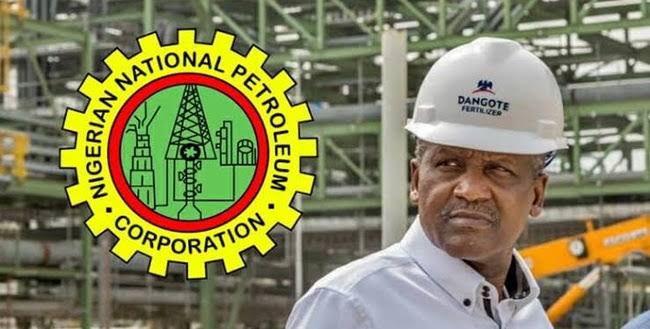
Nigerian National Petroleum Company Limited (NNPC) has officially ceased its exclusive purchase arrangement with Dangote Refinery, opening the market for other petroleum marketers to buy petrol directly from the refinery.
CLICK THE LINK TO READ FULL LIST
This significant development shifts the market away from the NNPC’s exclusive purchasing role, providing room for marketers to negotiate prices with Dangote on a “willing buyer, willing seller” basis.
CLICK THE LINK TO READ FULL LIST
This transition aligns with Nigeria’s current market practices for fully deregulated products like diesel, aviation fuel, and kerosene, which are already open to direct sales.
recommended by
Dangote Refinery, with its 650,000 barrels per day capacity, began producing petrol in September. Initially, Dangote’s Vice President, Devakumar Edwin, noted that the NNPC would be the exclusive buyer.
However, recent statements from the NNPC clarified that the refinery is free to sell to any interested marketer, removing its previous single-offtaker stance.
Related News
On 15 September, NNPC began loading petrol from Dangote Refinery, but it initially limited access to major marketers.
Independent marketers, however, were excluded from lifting the product.
Market Implications
NNPC’s exit as the exclusive petrol buyer signals a move toward a fully liberalized fuel market in Nigeria, potentially ending petrol subsidies.
With NNPC no longer responsible for the price differential, marketers will now purchase at cost directly from Dangote and set their own prices, which could result in higher fuel prices for consumers.
Additionally, marketers can now source petrol from multiple suppliers, not just Dangote, fostering a more competitive market environment that could contribute to supply stability across Nigeria.
This broader access might also stimulate investment in storage and distribution infrastructure, potentially improving product availability nationwide.
