

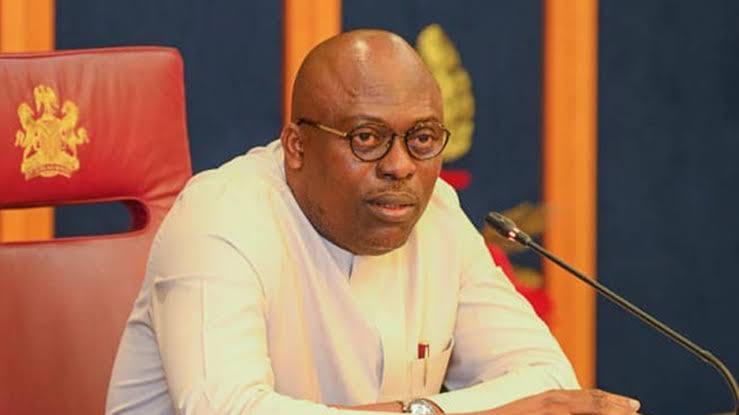
The Peoples Democratic Party reacted on Tuesday in Abuja and Port Harcourt after Rivers State Governor, Siminalayi Fubara, left the party for the All Progressives Congress. The opposition party accused the ruling APC of creating the political conditions that forced the governor out of the PDP and into a new camp.
CLICK THE LINK TO READ FULL LIST
The reaction came hours after Fubara made a formal announcement at a stakeholders meeting at the Government House in Port Harcourt. The meeting took place one day after he visited President Bola Tinubu in Abuja. During his address, Fubara told his supporters that he was moving to the APC because he believed the PDP could no longer shield him from the political battles he faced in the state. He also said he received assurance of support from the President during their private meeting.
CLICK THE LINK TO READ FULL LIST
The governor’s move placed all six states in the South-South region under APC control. Before Fubara’s defection, governors in Delta, Akwa Ibom, Enugu, Bayelsa and Edo had already crossed from the PDP to the ruling party within the year.
At the meeting in Port Harcourt, Fubara informed party loyalists that his decision was made to protect his government and prevent further instability. He stated that his recent meeting with the President convinced him that this shift would secure the interest of Rivers State. He later directed that the PDP flag be removed from the Government House.
Several top state officials, including former local government chairmen, the Secretary to the State Government and former ambassadors, were present when the governor declared his new political direction.
Hours after the announcement, the PDP leadership at the national level accused the APC of weakening Nigeria’s democracy by using the power of the Federal Government to break down opposition structures. The National Publicity Secretary of the PDP, Ini Ememobong, issued a statement from Abuja warning that the country was drifting toward a one-party system. He claimed that powerful individuals were now stronger than political institutions and were using federal influence to intimidate opponents.
The PDP also expressed pity for Fubara, saying his political challenges came from choices he made earlier in the year. The party insisted that it stood by him during the peak of the crisis with the former governor, now Minister of the FCT, Nyesom Wike. According to the party, the governor’s defection was not caused by abandonment from the PDP but by his own actions during the political standoff.
Related News
In Rivers State, a factional PDP chairman, Robinson Ewor, reacted by saying the governor had left the party long before Tuesday’s announcement. He argued that the APC-controlled emergency rule earlier declared in Rivers State had already placed most state structures under the control of the ruling party. He claimed Fubara returned from suspension with no institutional backing and was left with no real influence if he stayed in the PDP. Ewor insisted that the PDP still existed in the state despite the governor’s exit.
The political crisis in Rivers State dates back to early 2025 when the fallout between Fubara and Wike deepened. The disagreement spread to the House of Assembly, which eventually led President Tinubu to declare a state of emergency in March 2025. During the period of emergency rule, the governor, his deputy and the Assembly members were suspended, and a sole administrator, Vice Admiral Ibok-Ette Ibas (retd.), took charge of the state. The emergency rule ended in September, but tensions between the governor and state lawmakers remained.
In the days leading to Fubara’s defection, sixteen Assembly members moved from the PDP to the APC and pledged support for the President’s 2027 re-election bid. Twenty-two out of twenty-three local government chairmen in the state also backed Tinubu on Monday, further isolating the governor within his former party. The only chairman absent was from the governor’s own LGA, Opobo/Nkoro.
The last local government election held under the sole administrator saw APC winning twenty LGAs while the PDP secured only three. Political analysts in the state said this shift created a situation where staying in the PDP would have weakened Fubara’s control over political structures.
By Tuesday night, reactions continued from different PDP leaders. Many warned that the pattern of defection among governors from the South-South posed serious questions about party loyalty and the future of the region’s political landscape. Others blamed the crisis on the breakdown of trust between powerful political actors in the state.
The PDP insisted it would continue to operate in the state despite the changes and maintained that the defection of governors in other South-South states had not destroyed the party there.
The political atmosphere in Rivers State remained tense as residents awaited the next steps from both parties following the governor’s sudden move.

Comments are closed.