

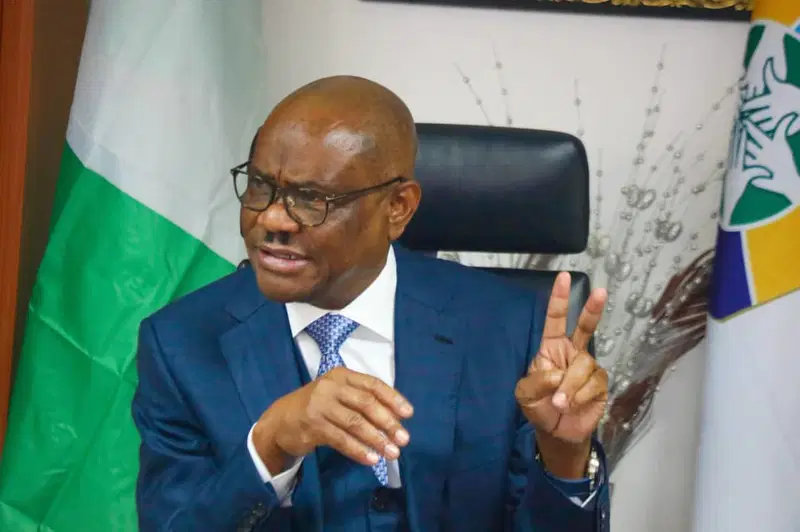
The Minister of the Federal Capital Territory, Nyesom Wike, criticised the political approach of former Labour Party presidential candidate Peter Obi during an interview on Arise Television. Wike argued that Obi’s political decisions over the years show a tendency to avoid difficult situations rather than confront challenges directly.
CLICK THE LINK TO READ FULL LIST
The FCT minister said effective leadership requires the ability to remain in difficult circumstances and work through problems instead of moving away when challenges arise. He claimed that Obi’s political journey reflects a pattern of leaving parties whenever internal crises emerge, rather than staying behind to resolve them.
CLICK THE LINK TO READ FULL LIST
Wike compared Obi’s approach with his own experience in the Peoples Democratic Party, where he chose to remain despite disagreements and political battles within the party. According to him, leadership is measured by the willingness to endure pressure and overcome obstacles rather than seeking easier alternatives.
The former Rivers State governor also spoke about the criticism he faced after his appointment as FCT minister. He recalled that many people doubted his ability to carry out reforms and execute projects in Abuja, but maintained that he remained focused on delivering results despite opposition and public attacks.
Turning to national issues, Wike defended President Bola Tinubu’s economic policies, particularly the removal of fuel subsidy. He said previous administrations had identified subsidy payments as a major problem but failed to take decisive action.
According to him, Tinubu demonstrated leadership by implementing a policy that other governments had avoided despite knowing the challenges it posed.
Related News
The minister acknowledged that the policy has brought hardship to many Nigerians but argued that difficult decisions are sometimes necessary if they are intended to produce long-term benefits. He maintained that leadership involves making tough choices even when they are unpopular.
Wike further stated that one of the biggest failures of leadership is recognising a problem without taking steps to solve it. He argued that leaders are elected and appointed not only to identify national challenges but also to make decisions capable of addressing them.
His comments also revisited Obi’s movement across different political parties. Wike pointed to the former Anambra State governor’s transitions from APGA to the PDP, then to the Labour Party, and more recently to the Nigeria Democratic Congress.
According to him, these shifts support his view that Obi often exits political platforms when faced with internal difficulties.
The remarks add to the growing political exchanges among leading figures ahead of the 2027 general election.

Comments are closed.