

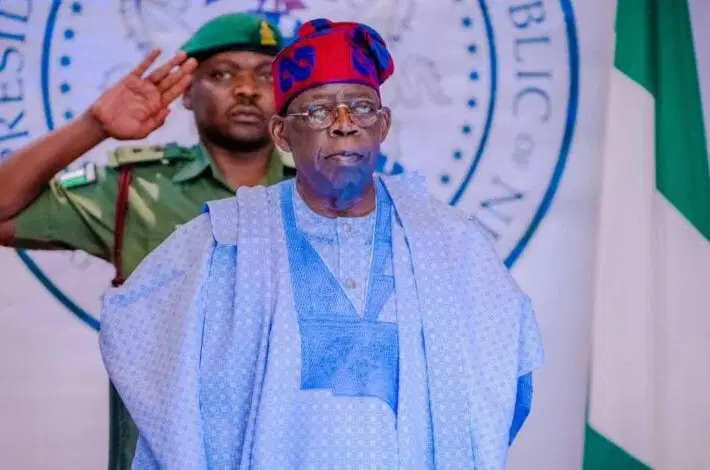
The Federal Government borrowed far more than planned in 2024 after a larger-than-expected budget deficit created additional financing needs, according to the latest report released by the Budget Office of the Federation. The report showed that the government raised N12.62tn in new debt during the year, exceeding its approved borrowing target of N7.83tn by N4.79tn.
CLICK THE LINK TO READ FULL LIST
The Budget Office explained that the higher borrowing became necessary because government revenue fell below expectations, while spending remained close to the approved budget. As a result, the fiscal deficit rose to N13.51tn, compared to the projected N9.18tn for the year. The deficit also surpassed the N10.55tn recorded in 2023, showing growing pressure on public finances.
CLICK THE LINK TO READ FULL LIST
According to the report, the Federal Government generated N20.98tn in revenue in 2024 against a budget estimate of N25.88tn, leaving a shortfall of N4.90tn.
At the same time, total government expenditure reached N34.49tn, only slightly below the approved estimate of N35.06tn. The figures showed that the wider budget gap was mainly caused by lower revenue rather than excessive spending.
The report revealed that domestic borrowing remained at the approved level of N6.06tn. However, foreign borrowing increased to N3.37tn, exceeding the budget target by N1.60tn. The government also received N3.19tn in budget support, even though no such funding had been included in the 2024 budget. Combined, these sources pushed total new borrowing to N12.62tn.
Data from the report showed that new borrowing financed about 36 percent of the 2024 budget, reflecting the government’s continued dependence on loans to fund its programmes.
The report also disclosed that project-tied loans from multilateral and bilateral partners reached N1.98tn, almost double the budget estimate. In addition, the government failed to generate any revenue from the planned privatisation proceeds of N298.49bn.
Oil revenue remained below expectations during the year. Gross oil earnings stood at N15.07tn, falling short of the budget estimate by N4.93tn. The report linked the weaker performance to lower international crude oil prices and reduced daily oil production, which averaged 1.54 million barrels per day instead of the projected 1.78 million barrels.
Related News
Despite the weaker oil earnings, non-oil revenue performed better than expected. The government generated N16.09tn from non-oil sources, exceeding the budget estimate by N5.29tn. The improvement was driven by stronger collections from Company Income Tax, Value Added Tax, Electronic Money Transfer Levy and Customs revenue.
The report further showed that debt servicing placed a heavier burden on government finances. Total debt service rose to N12.36tn, exceeding the budget estimate of N8.27tn by more than 52 percent. Capital spending also faced challenges, although N5.81tn was released and cash-backed for projects. Ministries, Departments and Agencies had utilised N3.27tn of the released funds by June 30, 2025.
The Budget Office also reported that Nigeria’s total public debt increased to N144.67tn by the end of December 2024. The country’s debt-to-GDP ratio rose to 61.22 percent, above Nigeria’s 40 percent benchmark and higher than the 56 percent level often used for similar economies.
Despite the figures, the Budget Office said ongoing reforms aimed at improving tax collection, increasing non-oil revenue, reducing leakages and strengthening remittances from government-owned enterprises would help reduce the country’s dependence on borrowing in the coming years.
Economists have expressed different views on the rising debt profile. Development economist Aliyu Ilias warned that continued borrowing could increase inflation and worsen the cost of living if not carefully managed, especially with rising debt servicing costs.
He maintained that the major issue is how borrowed funds are used and advised the government to improve oil production and expand trade to reduce the need for more loans.
Chief Economist and Director of Research at the Nigerian Economic Summit Group, Dr. Olusegun Omisakin, also maintained that borrowing itself is not the main concern. He said attention should be placed on ensuring that borrowed funds are invested in projects capable of delivering economic returns, particularly infrastructure that supports long-term growth.
The Chief Executive Officer of the Centre for the Promotion of Private Enterprise, Muda Yusuf, called for measures to slow the growth of Nigeria’s debt burden. He urged the government to improve revenue generation and maintain stronger fiscal discipline while making full use of ongoing tax reforms to reduce reliance on borrowing.
The report comes amid continued debate over the Federal Government’s borrowing strategy. While some public figures have questioned the growing debt profile, government officials have defended the policy, insisting that loans are being directed toward infrastructure and other productive investments needed to support economic development.

Comments are closed.