


Nigerians and opposition figures have begun questioning the Bola Tinubu administration over promises made by the All Progressives Congress before the 2023 presidential election, as political activities increase ahead of the January 16, 2027 presidential poll.
CLICK THE LINK TO READ FULL LIST
CLICK THE LINK TO READ FULL LIST
Critics say the government has failed to deliver on several commitments relating to security, jobs, electricity, poverty reduction and the economy, while the administration maintains that its reforms are producing results.
President Tinubu came into office with the Renewed Hope Agenda, promising to address major challenges facing the country and improve the living conditions of citizens. His administration introduced several economic reforms, including the removal of the petrol subsidy and the floating of the naira.
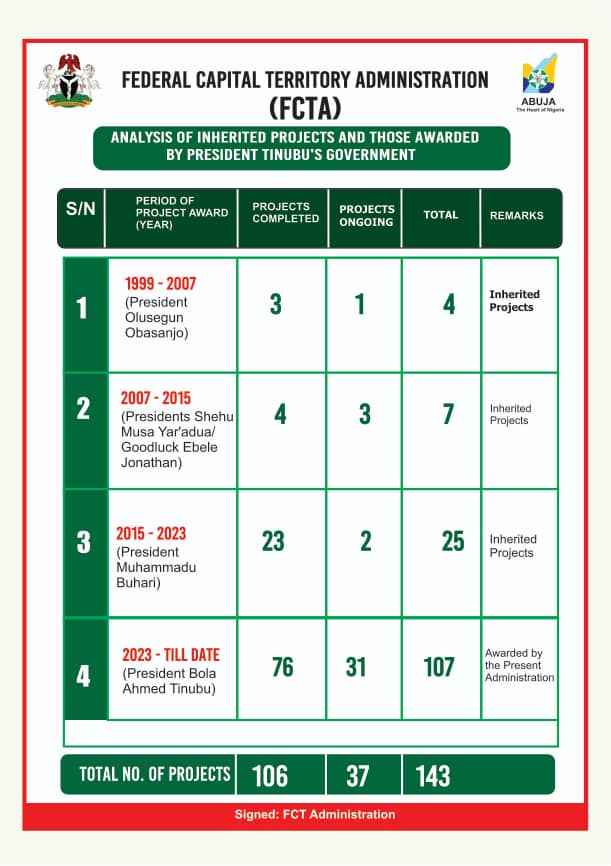
While the Federal Government and supporters of the administration have continued to point to infrastructure projects, investments and social programmes as evidence of progress, opposition groups argue that the reforms have increased the hardship faced by ordinary Nigerians.
The debate has returned to the centre of political discussions as Nigerians await the manifestos of presidential candidates for the 2027 election.
The opposition has particularly criticised the effects of the petrol subsidy removal and currency reforms, arguing that they contributed to rising living costs and placed additional pressure on households.
Figures cited from the International Monetary Fund’s 2026 Article IV consultation put the national poverty rate at 63 per cent, showing the difficult economic conditions still facing many Nigerians.
In 2022, Tinubu released an 80-page manifesto built around an eight-point agenda. The document contained plans covering employment, electricity, security, infrastructure, agriculture and other areas of national development.
One of the major promises was to create millions of jobs, particularly for young Nigerians, while supporting sectors capable of expanding employment and economic opportunities.
The administration has recorded changes in some economic indicators since taking office. Data from the National Bureau of Statistics shows that the official unemployment rate, which stood at 5.3 per cent in the fourth quarter of 2022, had fallen to between 4.3 and 4.9 per cent in 2026.
Despite the figures, opposition politicians and other critics maintain that unemployment remains a major concern because many Nigerians struggle to find stable and well-paying jobs.
Electricity supply was another major issue raised during the 2023 campaign. Tinubu had promised to increase electricity generation and improve transmission and distribution so Nigerians could have more reliable and affordable power.
He also made a public commitment linking his re-election bid to the delivery of steady electricity, saying voters should judge his administration by its performance in that area.
Although the number of major national grid collapses has reportedly reduced compared with previous administrations, complaints over electricity supply remain widespread.
Some communities continue to experience prolonged blackouts, while households and businesses complain about the cost of alternative power sources and the unreliable supply from the national grid.
Related News
Security was also a key part of Tinubu’s campaign promises. His manifesto contained plans to strengthen the country’s security system and tackle terrorism, kidnapping, banditry and other forms of violent crime.
However, critics argue that insecurity has remained a serious problem since he assumed office in May 2023.
Available reports indicate that at least 750 people were killed by terrorists in 2025, while attacks by terrorists, bandits and other criminal groups have also forced many residents to leave their communities.
Nigeria has also been ranked among the countries most affected by terrorism, while thousands of kidnapping cases have reportedly been recorded since the Tinubu administration came into power.
The situation has also affected schools, with several mass abductions involving pupils and school workers recorded over the past three years.
Against this background, some Nigerians have warned the APC against returning to the electorate with promises they believe were not fulfilled during the first term.
Former Rivers State chairman of the African Democratic Congress, Leader Sampson, accused the Tinubu administration of failing to deliver the expected benefits of its Renewed Hope programme.
Sampson blamed some of the economic difficulties on the removal of the petrol subsidy, saying the policy immediately triggered an increase in fuel prices and placed additional pressure on Nigerians.
He also criticised the government’s handling of insecurity and electricity, arguing that citizens continue to face difficulties travelling by road because of insecurity and by air because of high fares.
Political analyst and grassroots mobiliser Aaron Akogwu also questioned what the APC would present to voters during the 2027 campaign. He argued that the ruling party would have to explain how far it had gone in fulfilling the commitments made before the 2023 election.
Businessman Prince Isaac Fayose also rejected claims that the economy had improved under Tinubu, arguing that government policies had benefited wealthy Nigerians more than people at the lower end of society.
Fayose criticised the removal of subsidies and questioned the value of the government’s cash transfer programmes, arguing that the amounts provided were too small to make a lasting difference for poor families.
He also pointed to poor road conditions in parts of the South-West and continued hardship in northern communities as signs that many Nigerians were yet to feel the benefits of the government’s reforms.
However, the Federal Government has continued to defend its economic policies.
Minister of Finance and Coordinating Minister of the Economy, Taiwo Oyedele, recently described Moody’s decision to change Nigeria’s economic outlook from stable to positive as external recognition of the reforms being implemented by the Tinubu administration.
Oyedele said the government’s next objective was to move Nigeria towards investment-grade status, as the administration continues to pursue its economic reform programme.
With the 2027 campaigns now beginning, the debate over Tinubu’s record is expected to become a major part of the political contest, as the administration seeks to present its achievements while opposition parties focus on areas where they believe its promises remain unmet.

Comments are closed.