

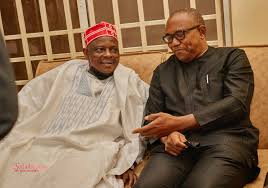
A chieftain of the New Nigeria People’s Party, Buba Galadima, has revealed that former Anambra State governor Peter Obi and former Kano State governor Rabiu Musa Kwankwaso are expected to leave the African Democratic Congress and announce a new political platform on Monday. He made this known on Saturday during a stakeholders’ meeting held in Abuja.
The development comes as political realignments continue ahead of the 2027 general elections, with opposition figures reviewing their positions and alliances. According to Galadima, the planned move is part of ongoing efforts by key opposition leaders to form a stronger platform.
Findings from sources close to the politicians indicate that both leaders are concluding plans to join a newly formed party known as the Nigeria Democratic Congress, which is said to have links with former Bayelsa State governor Seriake Dickson. The move follows weeks of speculation about their next political step after recent challenges affecting opposition parties.
Galadima also told supporters to prepare for reactions that may follow the announcement, including criticism and attacks, especially on social media and in public discussions. He urged those backing the leaders to respond carefully and remain focused as events unfold.
Related News
He further claimed that opposition figures have faced pressure in recent times, including actions that have affected party structures and operations. According to him, several political parties have been weakened by internal issues and external challenges, creating the need for a new direction.
At the meeting, Isaac Fayose also showed support for the proposed alliance between Obi and Kwankwaso, describing it as a workable option ahead of the next elections. He expressed confidence in the strength of the movement across many states.
Activist Aisha Yesufu, who also spoke at the event, called for unity among Nigerians, urging citizens to look beyond ethnic and regional differences and work together for the country’s progress.
The expected announcement on Monday is likely to shape the direction of opposition politics as preparations for the 2027 elections continue.

Comments are closed.